


Why leaves fill gutters fast and what a blocked gutter does to the house underneath it.
The short answer
- Narva's street and garden trees fill gutters with leaves within a couple of weeks, usually from late September into November.
- A blocked gutter stops draining water — it spills straight over the edge onto the façade, the windows below, and the foundation line.
- In winter, standing water in a gutter freezes and expands, ripping brackets loose and lifting the roof edge.
- House gutters are worth checking and clearing twice a year: in autumn once the leaves are down, and again in spring.
- Clearing means the gutter, the downpipe and the outlet — emptying the trough alone leaves the blockage that actually causes the damage.
Narva's streets and yards are lined with maples, lindens and birches, and in autumn that entire canopy comes down within a couple of weeks. Some of it lands on the lawn, where it is a simple matter of raking. The rest lands in the gutter, where it stops being a tidiness issue and becomes a slow-moving drainage failure.
Why gutters in Narva fill up so fast
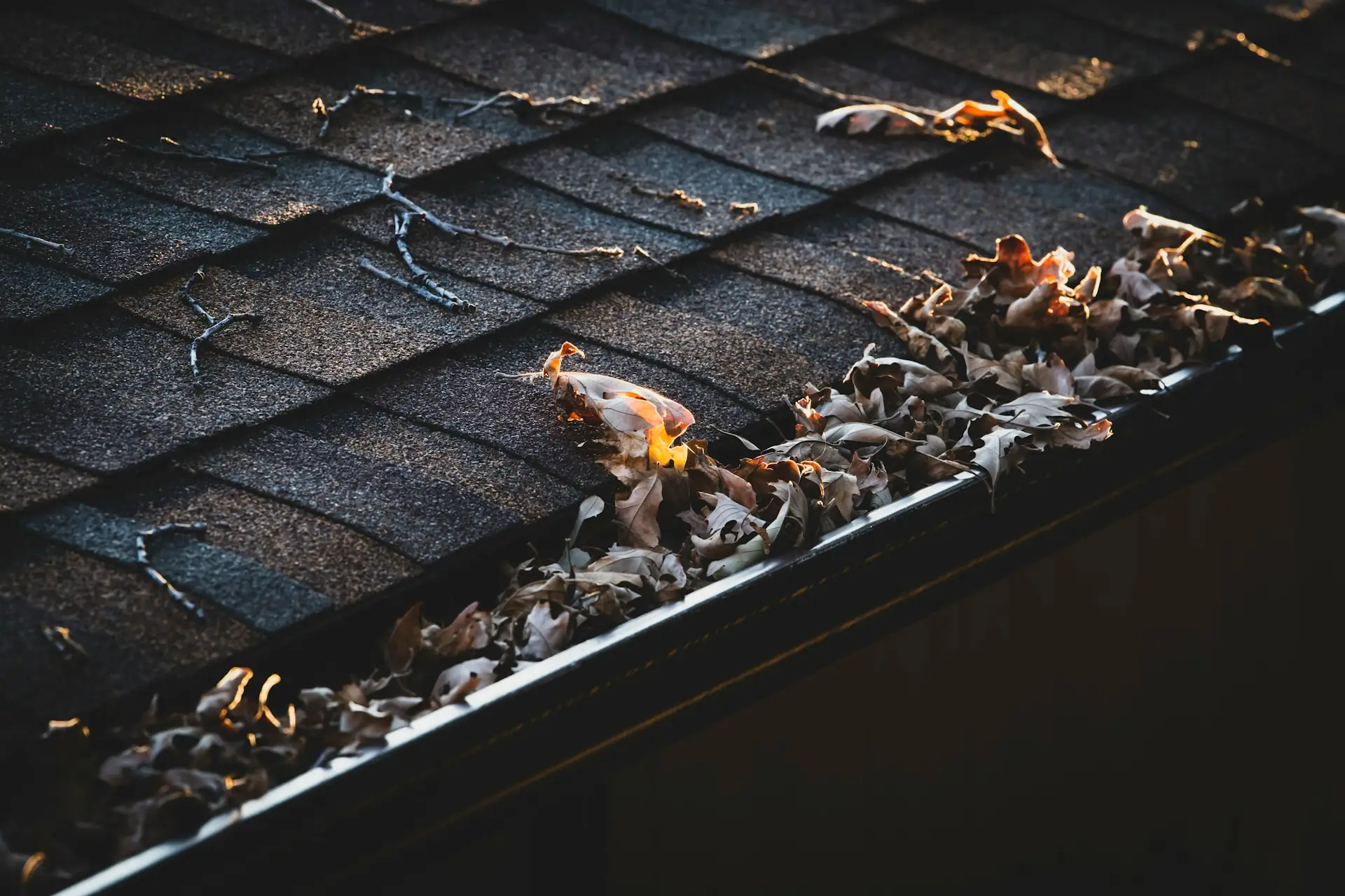
A gutter is built to carry water, not to catch leaves, but the shape that collects water collects everything else that comes off a tree too — leaves, seed pods, twigs, catkins. In a town like Narva, where many houses sit under or beside mature trees, that build-up happens in weeks, not months. One strong autumn wind can fill an entire roof edge overnight.
The problem is not just the volume of leaves, it is what happens to them next. Wet leaves press together into a dense mat at the bottom of the trough that will not let even a small amount of water through. A blocked gutter does not clear itself — the next rain just spills over the edge.
What happens when a gutter is blocked
Water that cannot fit through a blocked gutter does not sit and wait — it finds another route. Most often that means straight over the front edge, soaking the façade and render exactly where it does the most damage. Some of it also gets in behind the roof edge and the gutter brackets, where it starts rotting timber and metal out of sight.
The most common place we find cracked render and damp staining is directly under a gutter — not in the middle of a roof, but exactly where water ran over the edge instead of through the trough.
- The façade and render pick up staining, dirt and, over time, cracking from repeated soaking.
- Water running down the wall line finds its way to the foundation and basement.
- In winter, standing water in the gutter freezes and expands, tearing brackets loose and lifting the roof edge.
- A blocked downpipe makes the gutter heavy, and it can pull away from the fascia under the weight of snow.
- Standing water and rotting leaves attract insects and create an unpleasant smell, particularly under nearby windows.
Signs a gutter needs clearing
- Water pours over the gutter's edge during rain instead of running through it.
- The gutter visibly sags and feels heavy with leaves and silt.
- Little or no water comes out of the downpipe during rain.
- There is a damp line or dark streak on the façade under the gutter.
- Weeds are growing out of the gutter, or there is a bird's nest inside it.
How the clearing works
- 1
Inspection
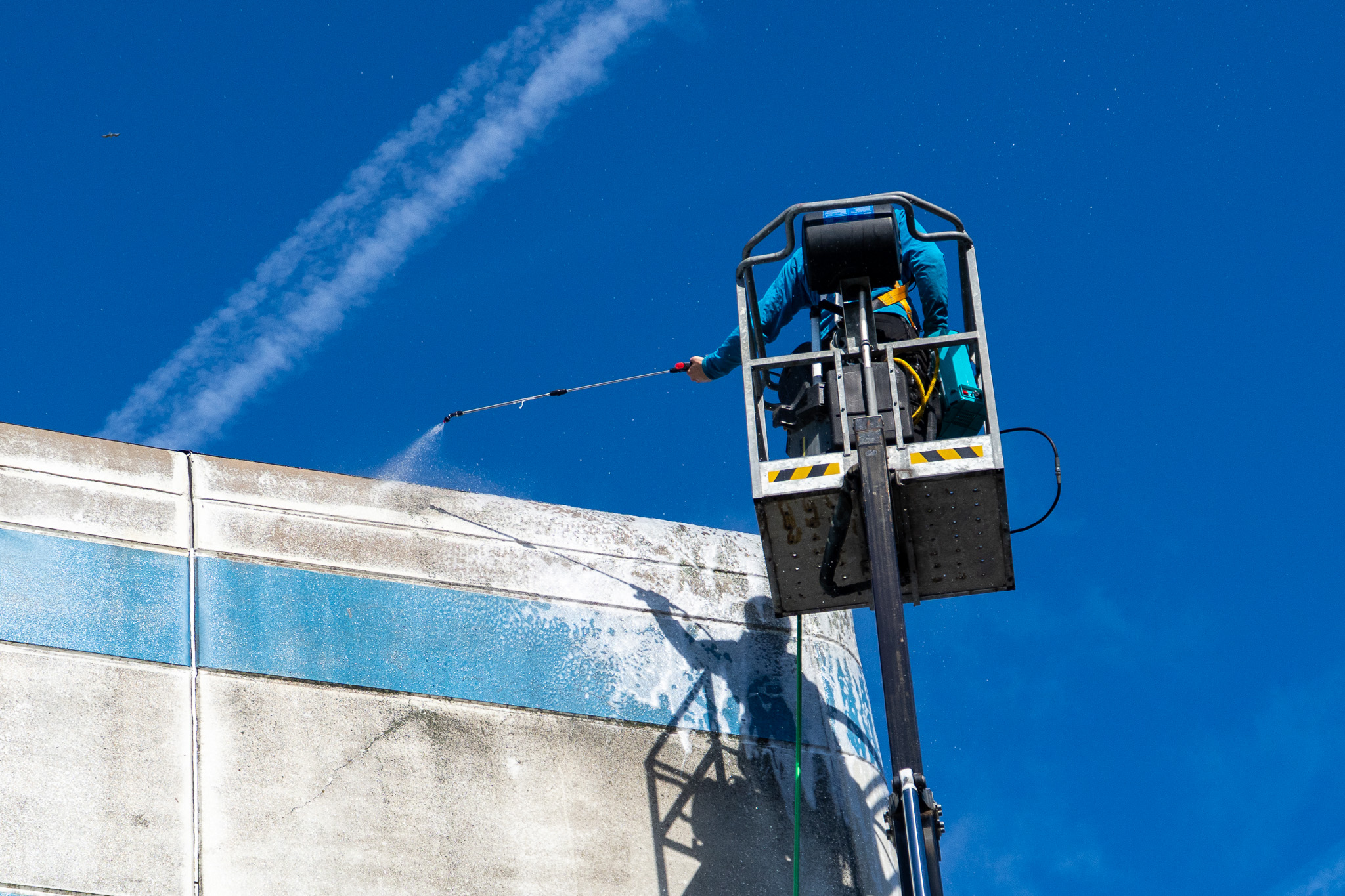
We check the gutter's length, how badly it is blocked, and the condition of the brackets, plus access — whether a ladder or a lift platform is needed.
- 2
Clearing leaves and sludge
By hand or with a vacuum system, we remove leaves, twigs and the sediment layer from the bottom of the trough without scratching the finish.
- 3
Flushing the downpipes
We check and flush the downpipe, because the actual blockage often sits inside the pipe rather than in the visible section of gutter.
- 4
Water flow test
We run water through the gutter to check the fall and confirm it drains freely to the outlet.
- 5
Checking brackets and outlets
We flag loose brackets and any damaged sections worth fixing before winter.
How often to clear gutters in Narva
Most Narva houses do fine with two clears a year: in autumn, once most of the leaves are down but before the first hard frost, and in spring, to check what built up over winter. Houses under heavy tree cover — especially near birches and maples — are worth checking again mid-autumn, at the peak of leaf fall.
For apartment buildings and commercial properties, where the gutter run is longer and access is harder, the schedule usually sits inside a maintenance contract that checks gutters alongside the roof and façade.
Doing it yourself or hiring it out
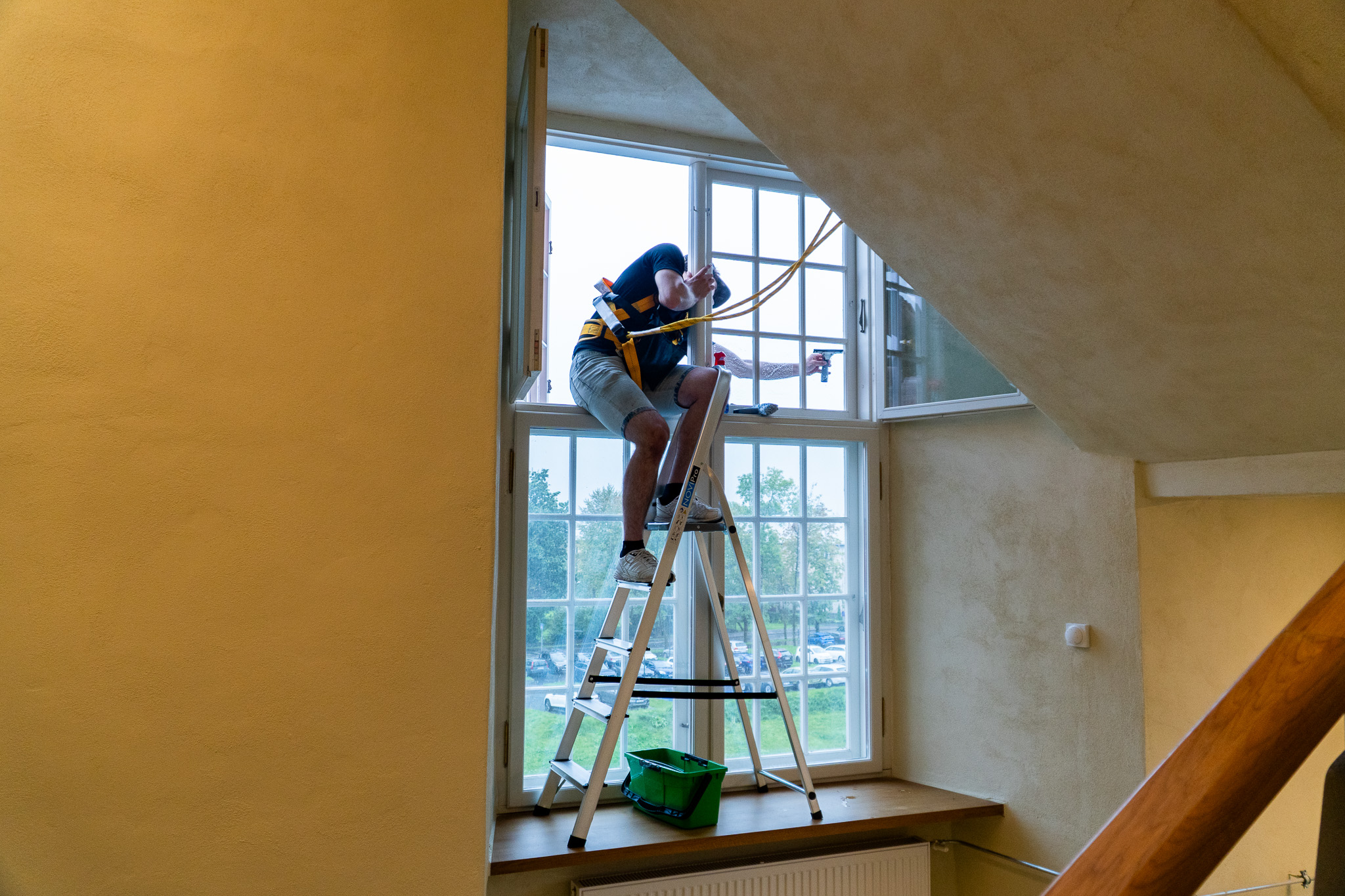
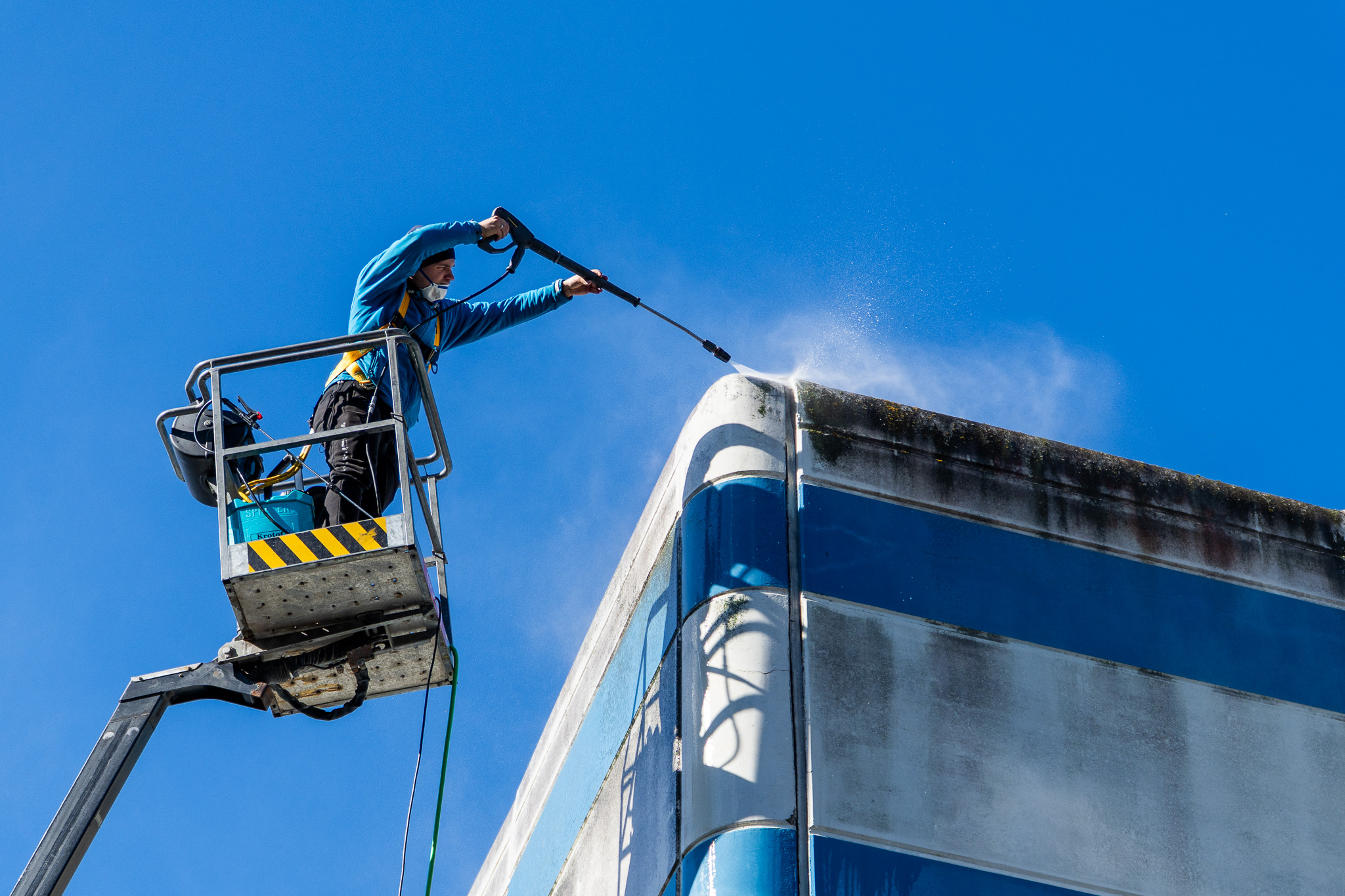
A single-storey house's gutters can often be cleared yourself with a proper ladder and someone to hold it steady. The trouble starts with height and length — a second-storey gutter means a fall risk, and clearing a long run by hand, section by section, takes a full day. A professional service covers the whole gutter in one pass, including a downpipe flush, which is hard to do properly from a ladder.
Why this matters more in Narva
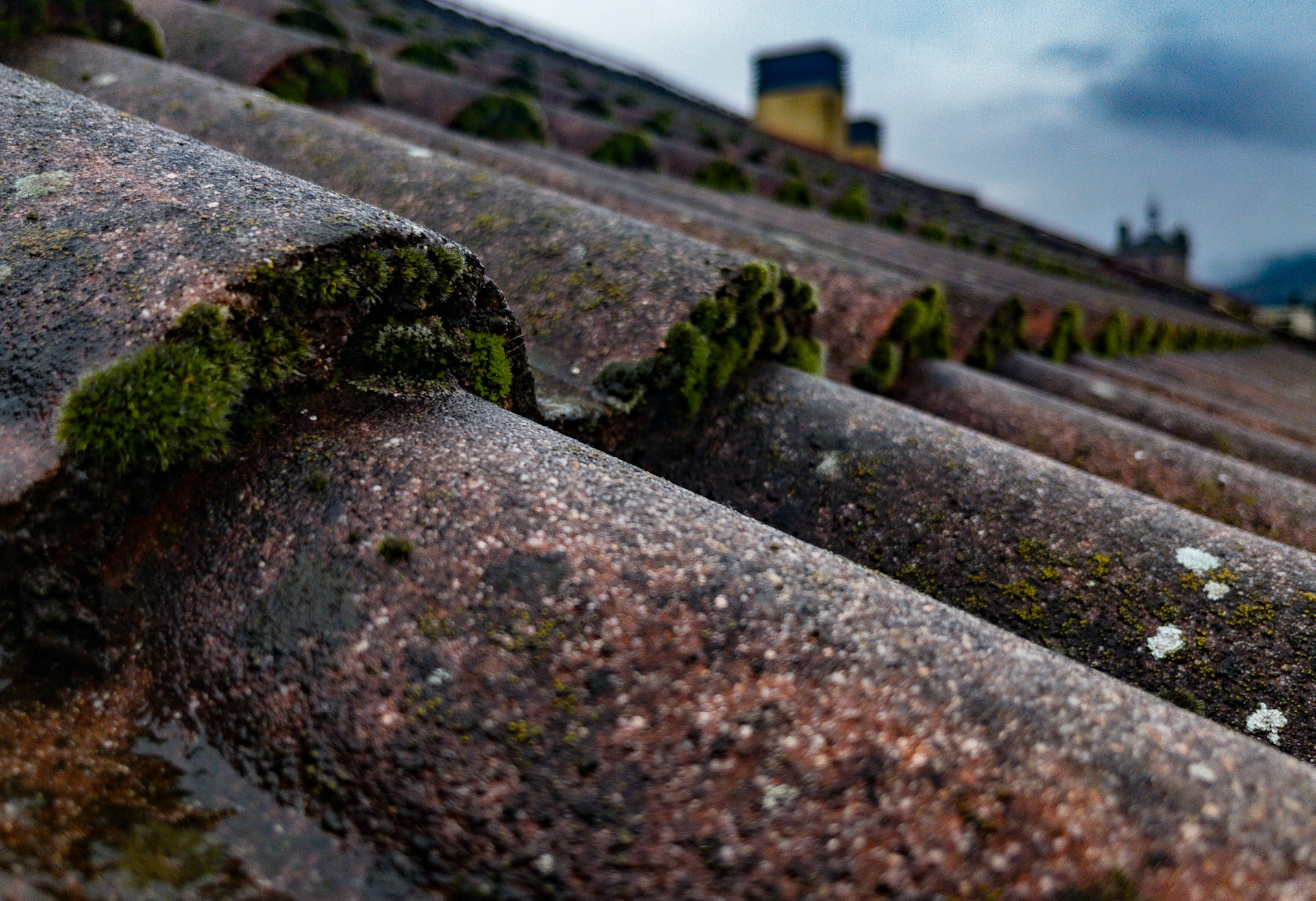
Autumn in Narva and Ida-Virumaa is damp and windy, so leaves in a gutter do not dry out and blow away on their own — they stay wet and pack down in layers. The same dampness that grows moss on roofs turns a blocked gutter into a source of damage faster. The winter freeze-thaw cycle finishes the job: water that overflowed a gutter's edge in autumn has usually already damaged the façade or foundation line by spring.
Frequently asked questions
How often should gutters be cleared in Narva?
What happens if a gutter is not cleared?
Can I clear my own gutters?
Can a blocked gutter damage the roof itself?
What is included in a gutter clean?
Updated: · Cleaning & property maintenance, Estonia