


Why roofs in Narva-Jõesuu grow moss faster than roofs further inland.
The short answer
- Roofs in Narva-Jõesuu sit in pine forest shade and sea-driven damp air — two factors that speed up moss and algae growth more than further inland.
- Pitched roofs on cottages and year-round homes under trees stay wet into spring, an ideal surface for moss.
- Pressure washing takes moss off but tears away the roof's protective layer — on the coast, where the roof is already under more strain, the damage is worse.
- A soft wash kills moss and algae at the root and works on tile, metal and asphalt shingle roofs alike.
- On the coast a roof is worth assessing every 2–3 years, more often than inland, especially on cottages standing under trees.
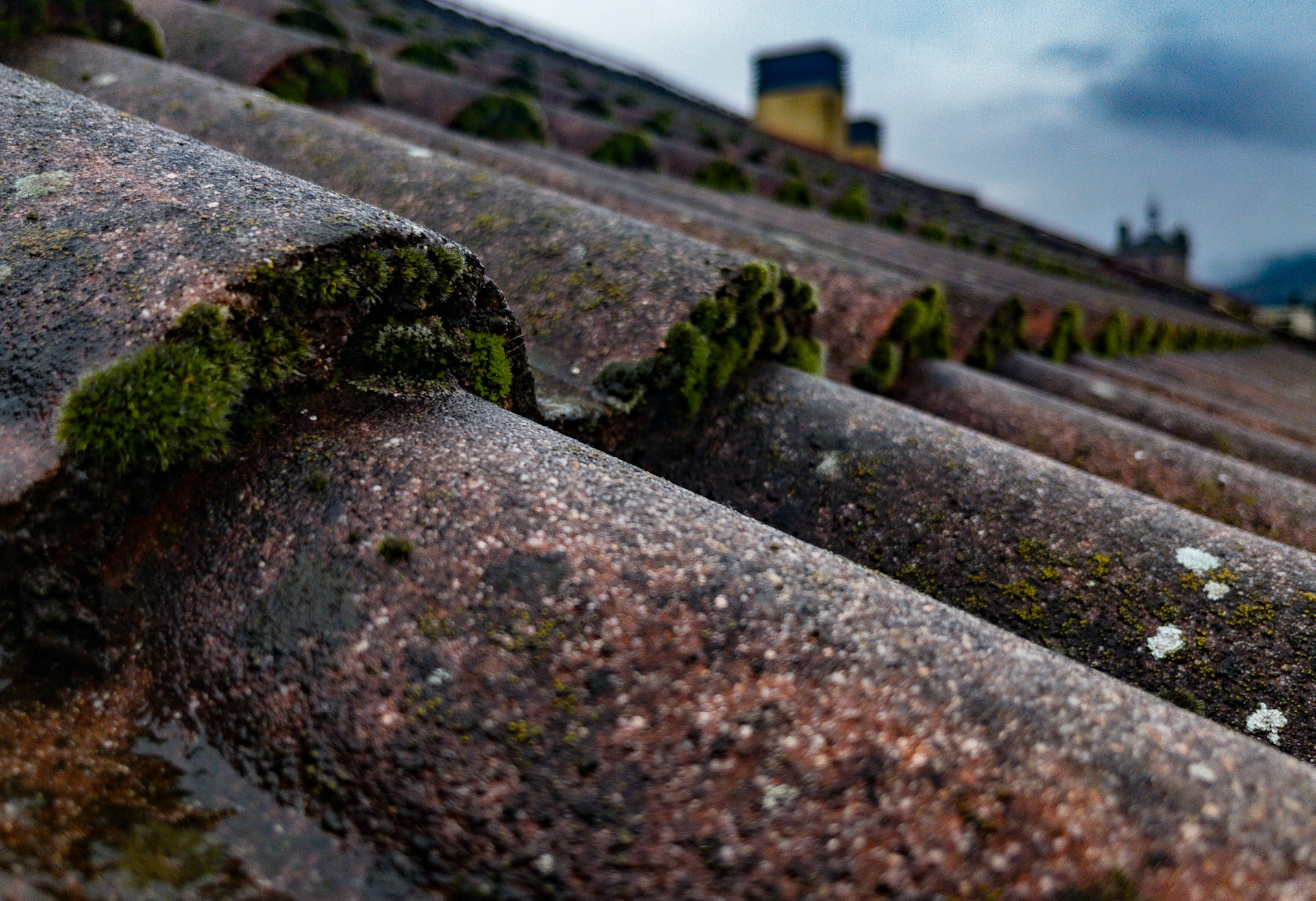
Narva-Jõesuu is known for its pine forest, sandy beach and summer cottages, but exactly what makes the town a holiday spot also makes its roofs a favourable environment for moss. Roofs in Narva itself grow moss mainly from shade and dampness; in Narva-Jõesuu two more factors are added — pine shade for most of the year, and the sea, which keeps the air damp even on sunny days.
Why roofs in Narva-Jõesuu grow more moss
Moss and algae need three things: moisture, shade, and a rough surface to grip. A pine forest provides shade almost all year round, because a conifer does not shed its needles the way deciduous trees do and keeps a roof shaded even in summer. The sea adds moisture to the air that condenses on a roof overnight even when it has not rained for weeks. Together, a roof in Narva-Jõesuu can stay wet longer than an identical roof a couple of kilometres inland.
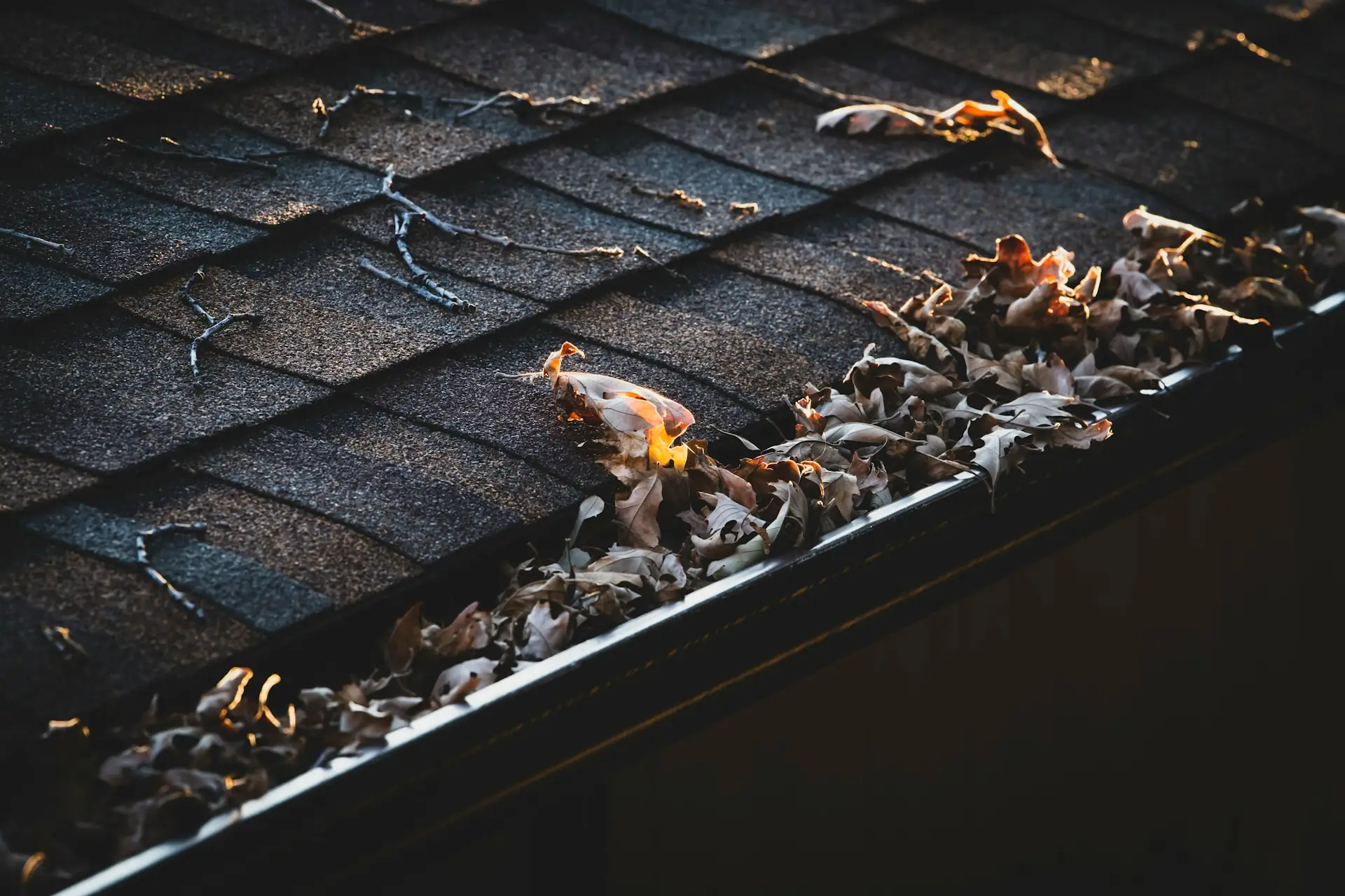
A layer of needles adds to the problem: pine needles drop year round and collect in a roof's low points and gutters, holding moisture exactly where water should be draining away freely. That creates a permanent growing surface for moss that roofs further inland usually do not have.
Cottages and year-round homes — different risk
A large share of Narva-Jõesuu's housing is seasonal cottages that stand empty over winter, with nobody checking the roof for months at a time. Moss and algae grow fastest exactly when a surface goes undisturbed the longest — a seasonal cottage gives them far more time than a year-round heated home, where snow and ice melt off the roof faster thanks to warmth from inside.
- Cottages — check the roof in spring before the season opens, since it has gone unsupervised from autumn to spring.
- Year-round homes under trees — the roof stays just as wet in the shade, but problems are caught faster because the house is used daily.
- Buildings near pine trees — needles and cones fill gutters faster than under deciduous trees, calling for more frequent gutter checks.
Why not a pressure wash
Pressure washing looks like a quick fix, but on a roof surface it does more harm than good. Asphalt shingles shed their protective granules, concrete tiles lose the surface layer that protects the tile from the weather, and a metal roof loses its protective coating. In a coastal climate, where the roof is already under more strain from moisture and salt air, losing that protective layer means faster ageing than inland.
On the coast we have seen more pressure-washed roofs ruined than anywhere else in Ida-Virumaa — the owner wanted a quick result, and the roof aged several times faster over the following couple of years.
How a soft wash cleans a roof in Narva-Jõesuu
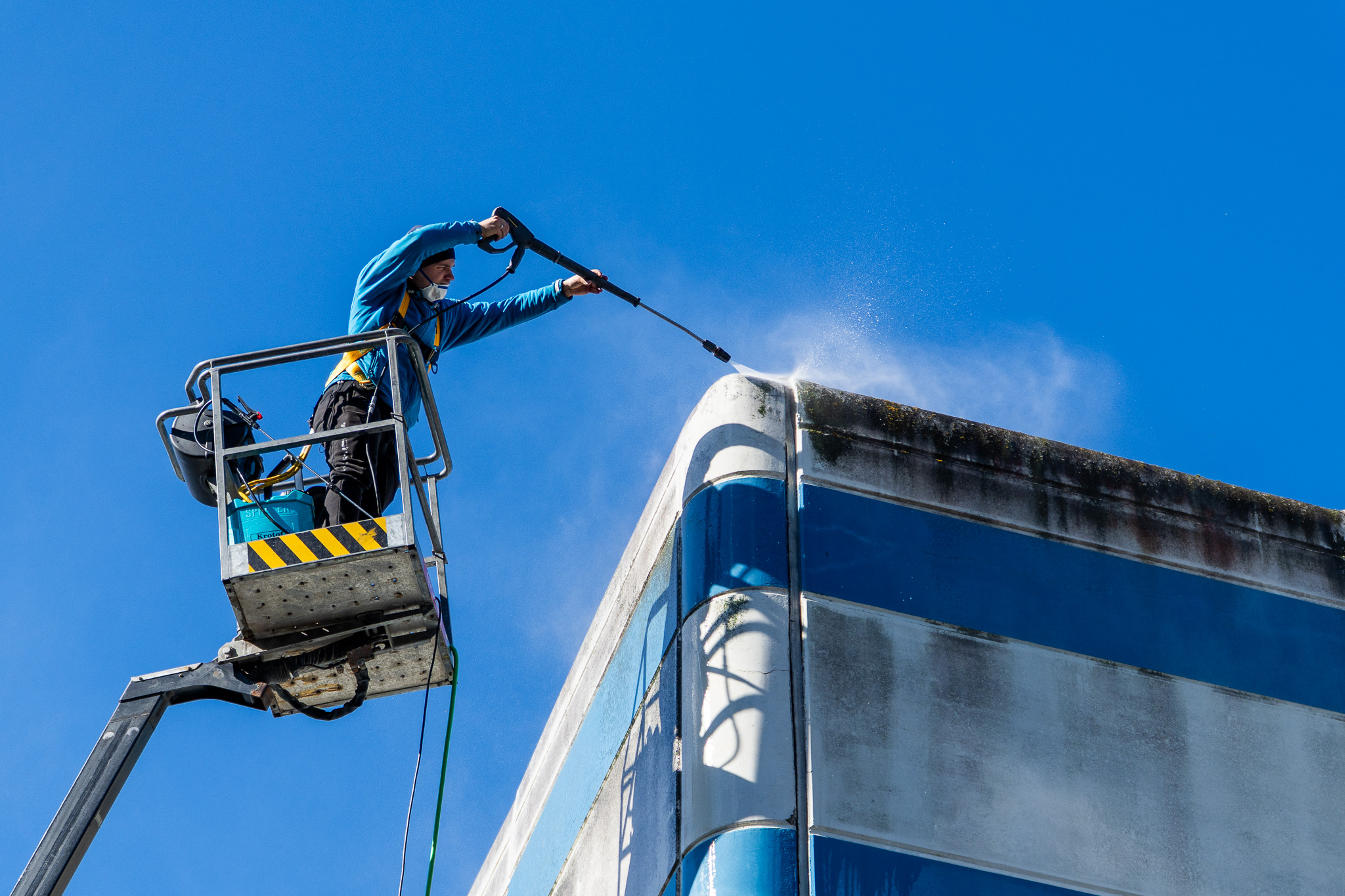
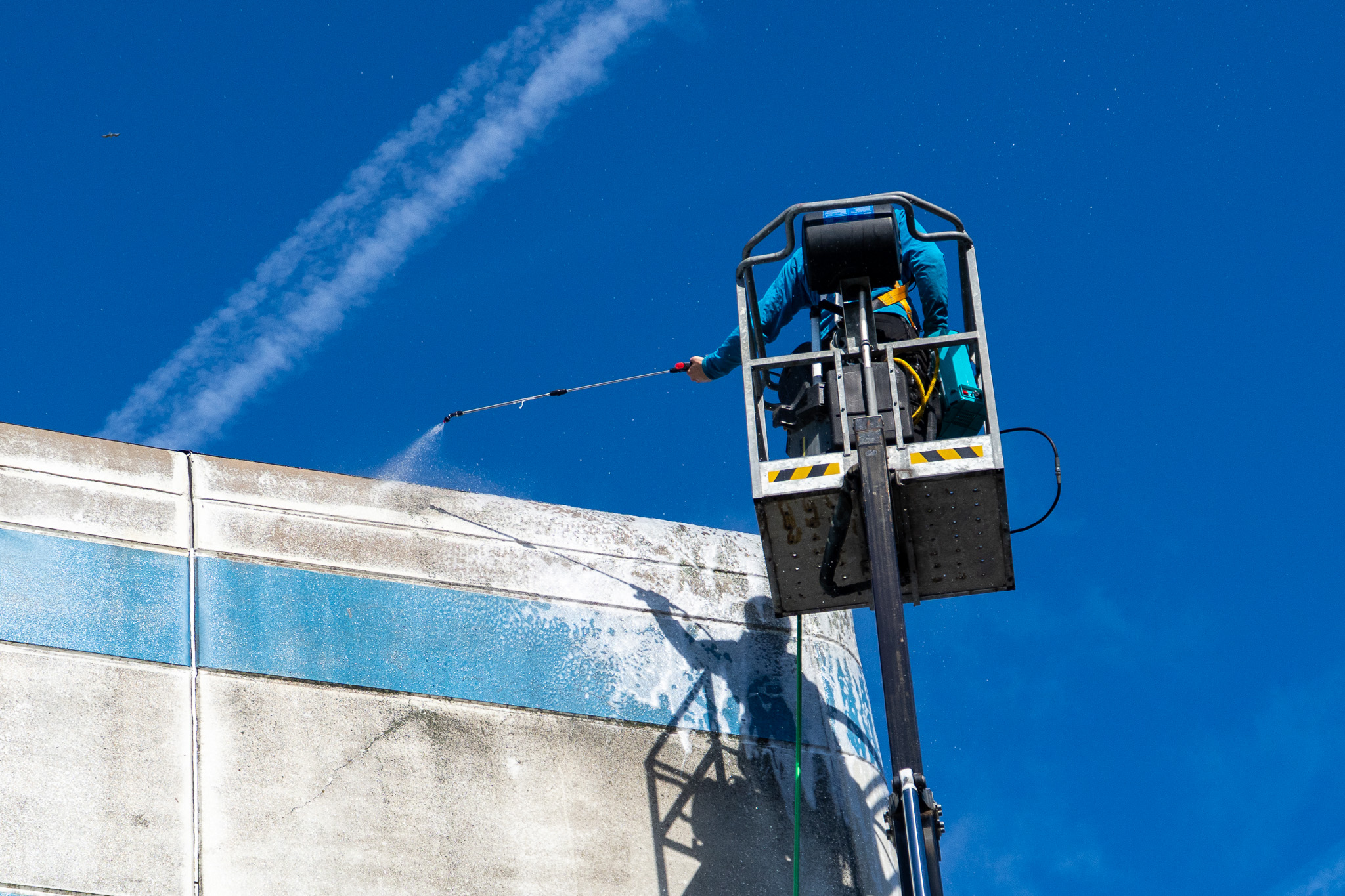
A soft wash does not rely on pressure. A cleaning solution is applied and left to dwell, killing moss, algae and lichen at the root, whether the roof is tile, metal or asphalt shingle. Rain and UV carry the dead material away over the following months. In the same visit we clear the gutters of pine needles and cones, because otherwise the same problem returns quickly.
- Inspection: roof covering type, pitch, and the extent of moss and needle build-up.
- Assessing access — many Narva-Jõesuu cottages sit on narrow roads, which affects equipment choice.
- Applying the cleaning solution at low pressure and moving safely across the roof.
- Dwell time, then a controlled rinse where the covering needs it.
- Clearing gutters and downpipes of pine needles and cones.
How often to clean a roof in Narva-Jõesuu
Where a soft-washed roof further inland in Ida-Virumaa usually stays clean for 2–4 years, in Narva-Jõesuu and other coastal areas it is sensible to plan on 2–3 years, especially under pine forest and on cottages that go unchecked over winter. A preventive algae treatment after cleaning extends the result here too, but on the coast it needs repeating more often than inland.
Cottage owners do well to pair a roof and gutter check with opening up the property in spring — that way damage is caught before it spreads under the roof covering or into the façade.
Frequently asked questions
Why do roofs in Narva-Jõesuu moss over faster than further inland?
Can I pressure wash my cottage roof?
How often should a roof be cleaned in Narva-Jõesuu?
Does roof cleaning include clearing needles from the gutters?
Should a cottage roof be checked before the season starts?
Updated: · Cleaning & property maintenance, Estonia