


Why roofs grow moss and how to clean them safely.
The short answer
- Roofs grow moss because they stay wet and shaded for much of the year — Estonia's damp climate is ideal for it.
- Moss and algae are not just unsightly: they hold moisture, which shortens a roof's life and blocks gutters.
- Pressure washing takes the moss off the top but tears away the roof's protective layer — more harm than good.
- A soft wash kills moss and algae at the root; rain and UV carry the dead material away over months.
- A soft-washed roof stays clean for 2–4 years; a preventive treatment extends that further.
A green or black roof is no rarity in Estonia — it is more the rule on north-facing and tree-shaded roofs. Before talking about cleaning, it is worth understanding why moss appears there at all, because that is exactly what explains why the wrong method only makes it worse.
Why roofs grow moss in Estonia
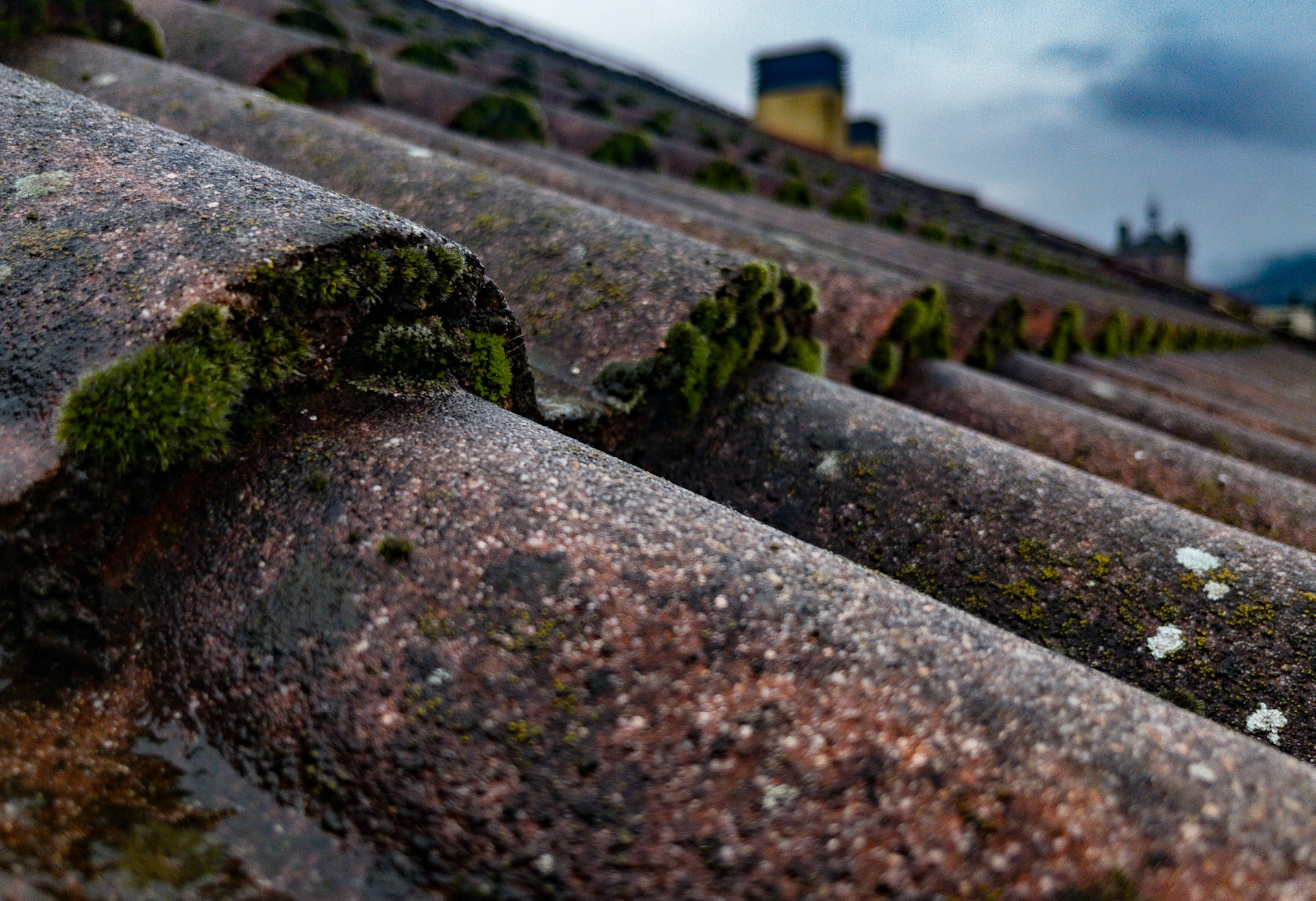
Moss and algae need three things: moisture, shade, and a surface to grab onto. Estonia's long, damp autumn and overcast winter provide the first two for much of the year. A north elevation sees no direct sun and stays wet for weeks; the roof's rough surface provides the third. That is why north-facing roofs go green while south-facing ones stay cleaner — it is not about dirt, it is about how long the roof stays wet.
Why moss is bad for a roof
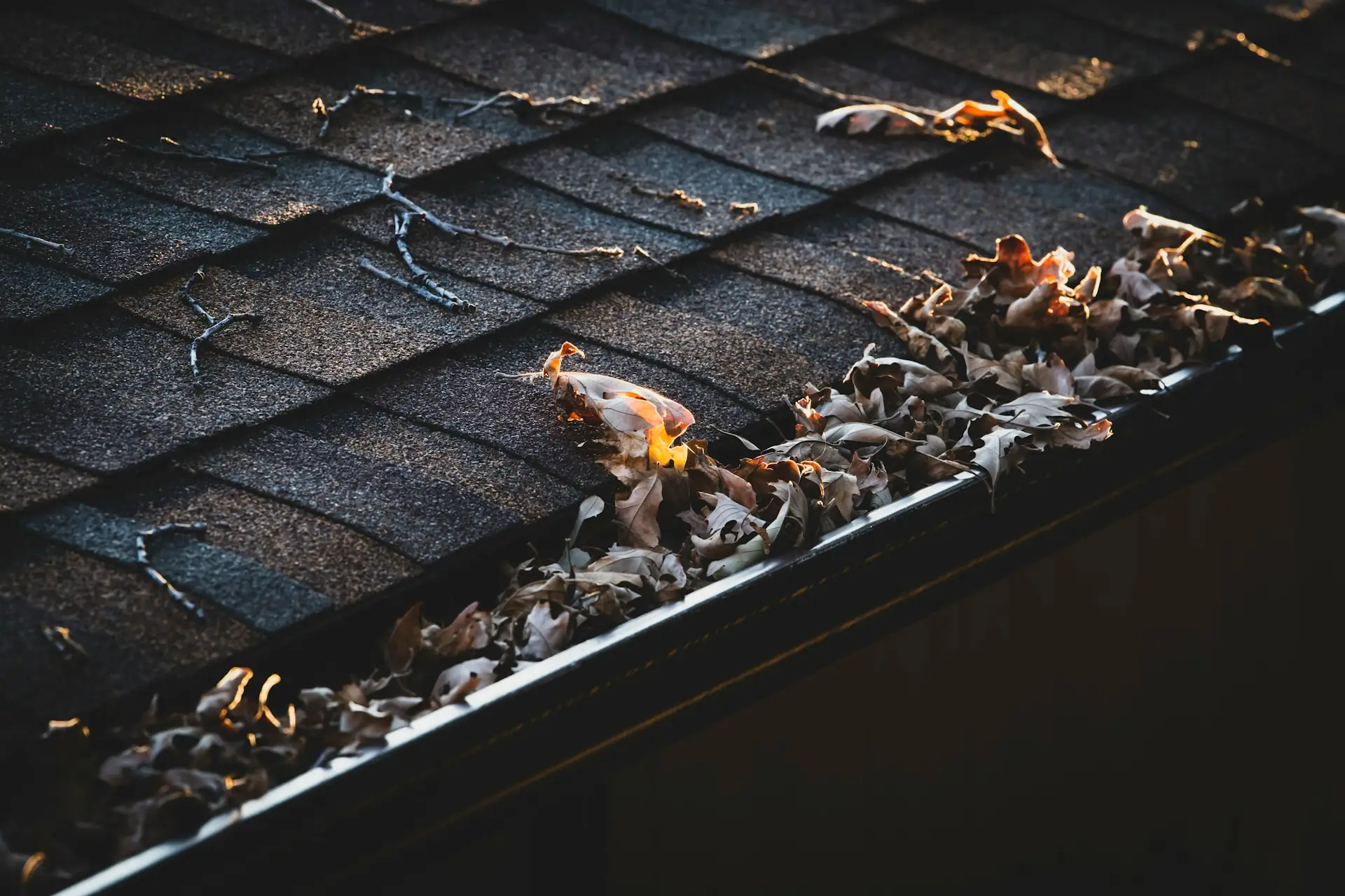
Moss is not only a looks issue. It works like a sponge: it holds moisture against the roof covering, speeding up wear and encouraging frost damage. The roots work into the surface of tiles and shingles, loosening it. Loose clumps and spores wash into the gutters, where they block the drainage system. Over time this means a shorter roof life and more expensive repairs.
Why not a pressure wash
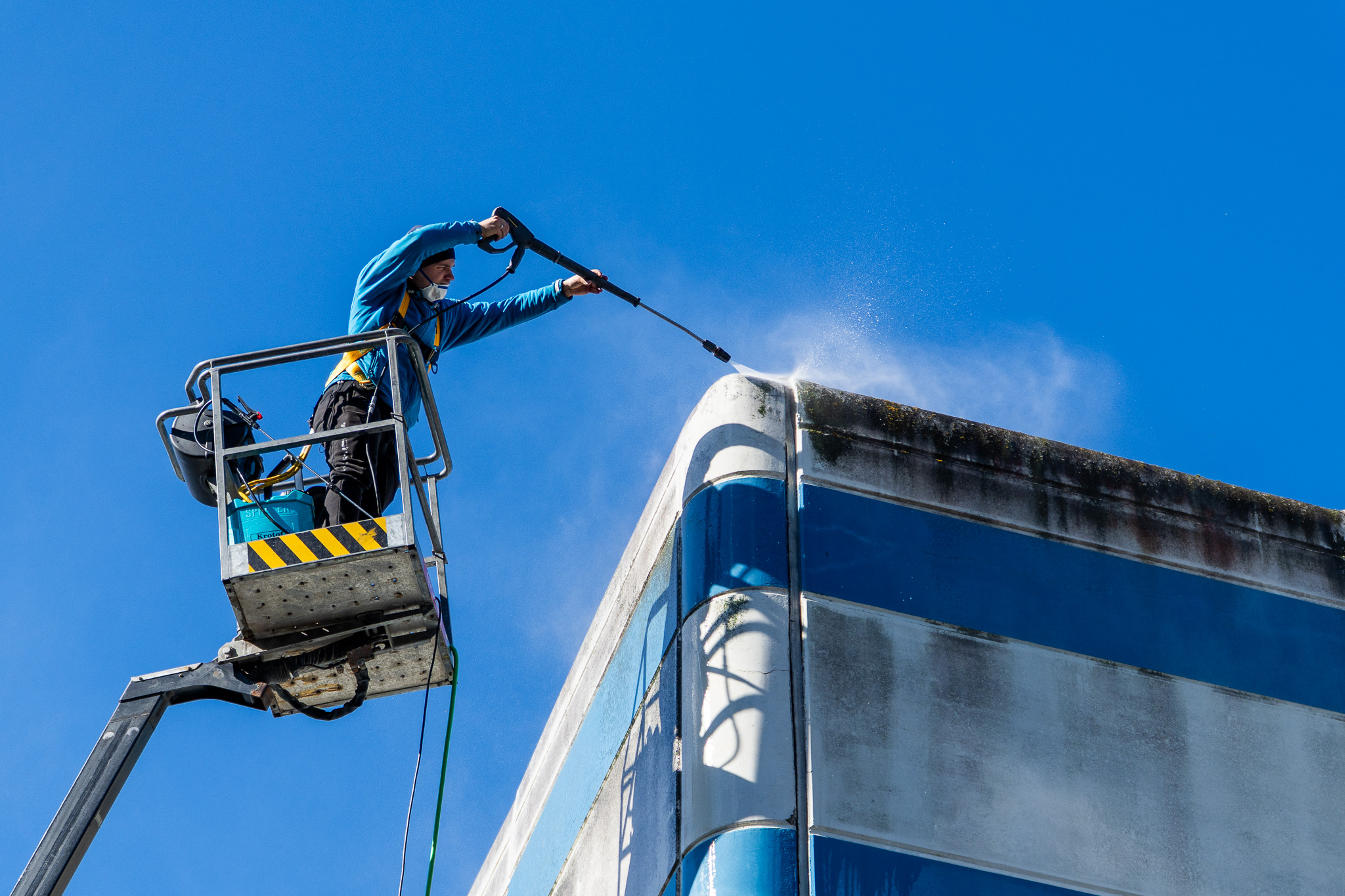
Pressure washing looks like a quick fix: the moss flies off and the roof looks clean straight away. The problem is what flies off with it. Asphalt shingles shed a layer of protective granules, and concrete tiles lose the surface layer that protects the tile from the weather. Without it the roof ages faster than before the wash. Pressure also drives water under the tiles and behind joints, where it leaks or freezes in winter.
A pressure-washed roof looks good for a week, then starts breaking down faster than before. It is the most common roof mistake we get called in to fix.
How a soft wash cleans a roof
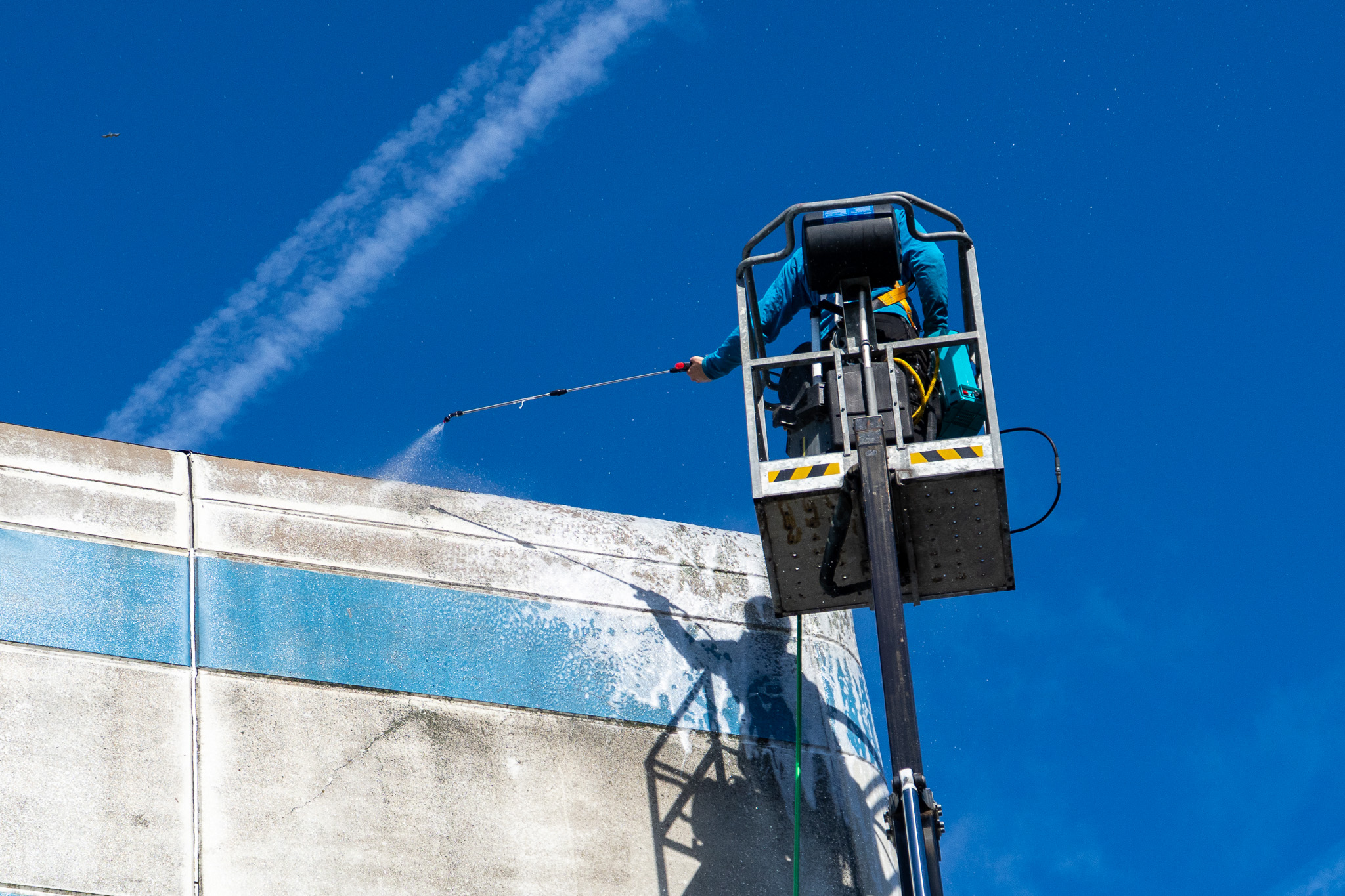
A soft wash does not rely on pressure. A cleaning solution is applied and left to dwell, and it kills the moss, algae and lichen at the root. The dead material is not torn off by force — rain and UV carry it away gradually over the following months. The roof clears more slowly than with pressure, but the result lasts years rather than months, and the roof covering stays intact.
- Inspection: roof covering type, pitch, extent of moss and gutter condition.
- Covering sensitive areas and planting, and pre-wetting.
- Applying the cleaning solution at low pressure, moving safely across the roof.
- Dwell time, then a controlled rinse where the covering needs it.
- Checking and clearing gutters and the drainage system.
Preventive algae treatment
After cleaning, the result can be extended with a preventive solution that slows the return of moss and algae. It is not needed on every roof, but on heavily shaded north elevations it pays for itself. It keeps the roof from going green again within a couple of years.
How often to clean a roof
A soft-washed roof normally stays clean for 2–4 years, depending on location and shade. Near woodland, in heavy shade, or near the sea it may need it more often. The sensible approach is to have the roof assessed at an inspection every couple of years, before moss has a chance to block the gutters.
Frequently asked questions
Can I pressure wash my own roof?
Why do roofs grow moss in Estonia?
How long does a roof stay clean after a soft wash?
Is moss on a roof actually harmful?
Does a soft wash kill the moss for good?
Updated: · Cleaning & property maintenance, Estonia